No-Code and Low-Code Platforms Explained: Do They Replace Developers in 2026?
No-code and low-code platforms are growing fast. Here is what they actually do and whether they threaten traditional developer jobs in 2026.
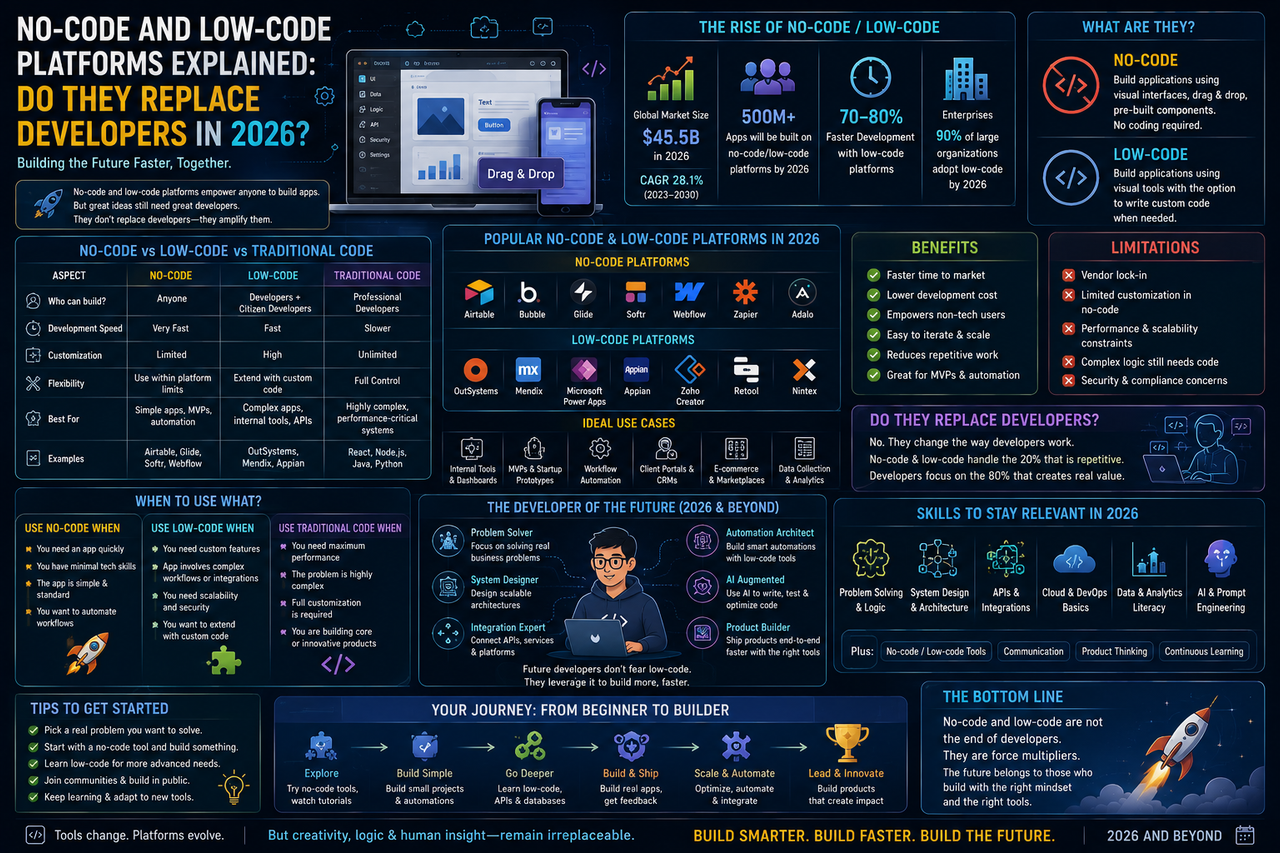
No-Code and Low-Code
Platforms Explained: Do They Replace Developers in 2026?
No-code and low-code platforms
have grown significantly, allowing non-programmers to build functional
applications through visual interfaces rather than traditional coding. This has
raised an ongoing question: are these tools a threat to software developers?
What No-Code and Low-Code Actually
Mean
No-code platforms allow users to
build applications entirely through drag-and-drop interfaces without writing
code, while low-code platforms combine visual development with the option to
add custom code for more advanced functionality.
Common Use Cases for These
Platforms
● Building internal business tools and
dashboards
● Creating simple websites and landing
pages
● Automating workflows between
different software tools
● Prototyping applications quickly
before full development
● Building basic mobile apps for small
businesses
Where No-Code and Low-Code
Fall Short
Complex applications with custom
logic, high scalability requirements or unique performance needs generally
still require traditional development, since no-code platforms often struggle with
deep customization and complex integrations.
Why Developers Are Not Being
Replaced
Rather than replacing
developers, these platforms have shifted some routine, repetitive
application-building work away from custom development, allowing developers to
focus on more complex, high-value engineering problems.
Should Students Learn No-Code
Tools
While not a replacement for
programming fundamentals, understanding no-code and low-code platforms can be
useful for quickly prototyping ideas, building side projects, or supporting
non-technical roles in a startup environment.
Final Verdict
No-code and low-code platforms
in 2026 have expanded who can build software, but they have not replaced the
need for skilled developers, especially for complex, scalable and custom
applications.