AI Image Generation: How It Works and Best Practices for 2026
AI image generation tools continue to improve rapidly. Here is an explanation of how they work and best practices for using them effectively in 2026.
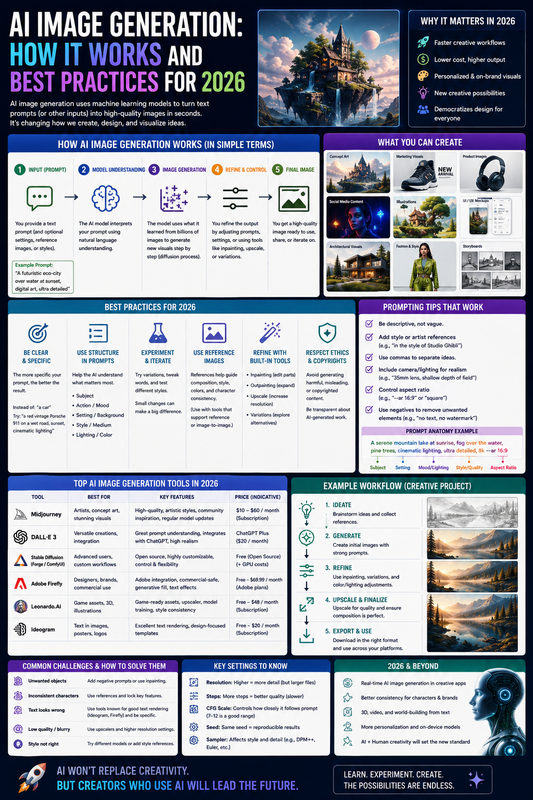
AI
Image Generation: How It Works and Best Practices for 2026
AI image generation tools have become
widely used across marketing, content creation and design, allowing users to
generate original visual content from simple text descriptions rather than
requiring traditional design or illustration skills.
How
AI Image Generation Works
These tools are trained on vast datasets
of images paired with descriptive text, learning to understand the relationship
between language and visual elements well enough to generate entirely new
images based on a text prompt, rather than retrieving or combining existing
images directly.
Common
Use Cases in 2026
·
Generating original visuals for
blog posts, social media content and marketing materials
·
Creating concept art and design
mockups during early creative planning stages
·
Producing custom illustrations
for presentations, branding and product design
·
Generating variations of a
visual concept quickly for creative exploration
Writing
Effective Prompts
Getting good results from AI image
generation tools often depends heavily on how specifically a prompt is written,
including details about style, composition, lighting, color palette and mood,
rather than vague, general descriptions that leave too much room for interpretation.
Best
Practices for Using These Tools
·
Be specific about style
references, such as photography, illustration or a particular artistic approach
·
Iterate through multiple prompt
variations rather than expecting a perfect result on the first attempt
·
Use reference images alongside
text prompts where the tool supports it, for more precise creative control
·
Review generated images
carefully for any unintended visual errors before using them professionally
Copyright
and Ethical Considerations
AI-generated images raise ongoing
questions around copyright, particularly regarding the training data used to
build these models and the ownership status of generated outputs. Businesses
using AI-generated visuals commercially should stay informed about the specific
licensing terms of the tool they are using, since these vary between platforms.
Limitations
Still Worth Knowing
AI image generation tools can still
struggle with accurately rendering text within images, maintaining precise
anatomical accuracy in certain poses, and following highly specific brand
guidelines without significant manual refinement afterward.
Final
Verdict