AI in Content Creation: How Creators Are Actually Using It in 2026
From scripting to editing, AI tools are reshaping content creation workflows. Here is a look at how creators are actually using AI in 2026.
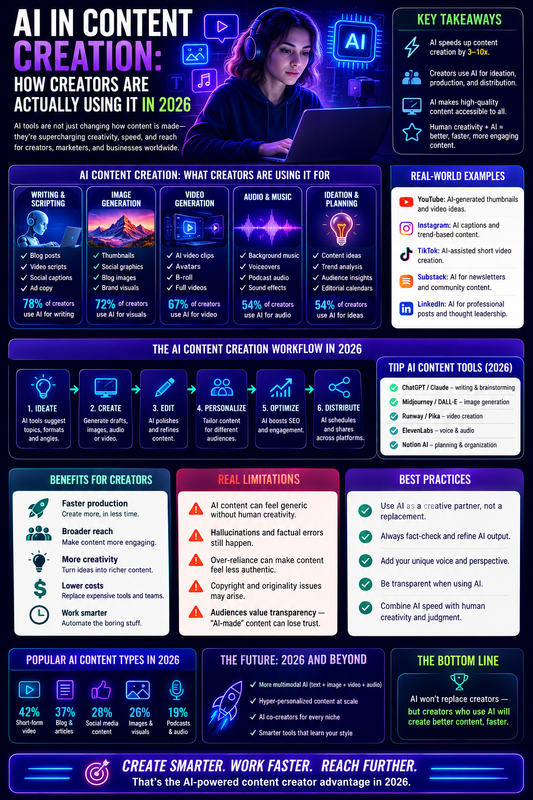
AI
in Content Creation: How Creators Are Actually Using It in 2026
Content creators across platforms have
increasingly integrated AI tools into their workflows, not necessarily to
replace the creative process entirely, but to speed up specific, time-consuming
parts of content production.
AI-Assisted
Scripting and Ideation
Many creators use AI tools to help
brainstorm content ideas, outline video scripts or draft initial versions of
captions and descriptions, which they then refine and personalize to match
their own voice and style rather than publishing unedited AI output directly.
AI
in Video and Audio Editing
·
Automated editing tools that
can trim silences, adjust pacing and generate rough cuts based on raw footage
·
AI-powered audio cleanup tools
that reduce background noise and improve overall sound quality
·
Automatic caption and subtitle
generation, saving significant manual transcription time
·
AI-assisted color grading and
basic visual enhancement tools
AI
for Thumbnails and Visual Assets
Many creators use AI image generation
tools to quickly create thumbnail concepts, background visuals or supporting
graphics, significantly speeding up a part of content production that
traditionally required either design skills or hired freelance help.
AI
Tools for Content Strategy
Beyond production, some creators use AI
tools to analyze audience engagement patterns, suggest optimal posting times,
or identify trending topics relevant to their niche, helping inform strategic
decisions alongside their own creative judgment.
The
Risk of Over-Relying on AI in Content Creation
While AI tools can genuinely speed up
production, audiences often respond negatively to content that feels entirely
automated or lacking a genuine creative perspective, making it important for
creators to use AI as a supporting tool rather than a full replacement for
their own voice and creative decisions.
Maintaining
Authenticity While Using AI Tools
Successful creators in 2026 generally use
AI to handle time-consuming technical or repetitive tasks, freeing up more time
for the genuinely creative and personal elements of their content, such as
storytelling, personality and genuine audience connection, which remain
difficult for AI to fully replicate.
What
This Means for Aspiring Creators
For students or aspiring creators,
learning to use AI tools effectively within a content creation workflow can
significantly reduce the barrier to entry that previously required either
technical editing skills or a larger budget for hired help.
Final
Verdict