AI Regulation and Ethics: Where Things Stand in 2026
Governments around the world continue shaping AI policy. Here is an overview of where AI regulation and ethical debates stand in 2026.
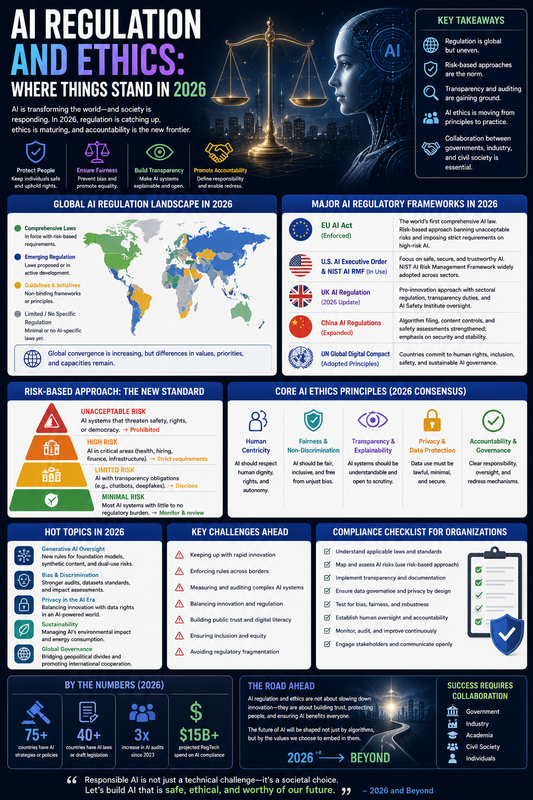
AI
Regulation and Ethics: Where Things Stand in 2026
As AI systems become more capable and
more deeply integrated into daily life, governments and regulatory bodies
around the world continue working to establish frameworks that balance innovation
with genuine safety and ethical concerns.
Why
AI Regulation Has Become a Priority
The rapid capability growth of AI
systems, combined with their expanding use across sensitive areas like
healthcare, finance, hiring and law enforcement, has pushed policymakers to
address concerns around bias, transparency, accountability and potential misuse
more seriously than in earlier, less capable generations of AI technology.
Key
Areas of Ongoing Regulatory Focus
·
Transparency requirements,
including disclosure when content is AI-generated
·
Bias and fairness standards,
particularly for AI systems used in hiring, lending or law enforcement contexts
·
Data privacy protections
related to the data used to train and operate AI systems
·
Safety requirements for AI
systems used in high-stakes areas, such as healthcare or critical
infrastructure
·
Accountability frameworks
determining responsibility when AI systems cause harm or make significant
errors
Different
Regulatory Approaches Around the World
Different regions have taken varying
approaches to AI regulation, ranging from more comprehensive, rules-based
frameworks to lighter-touch approaches that rely more heavily on existing laws
and industry self-regulation. This has created a genuinely complex, evolving
global regulatory landscape for companies operating across multiple regions.
Key
Ethical Debates in AI Development
·
How to ensure AI systems don't
perpetuate or amplify existing societal biases present in training data
·
Balancing AI capability
advancement with genuine safety testing and oversight
·
Determining appropriate levels
of transparency around how AI systems make decisions
·
Addressing concerns around
AI-generated misinformation and its potential societal impact
·
Questions around data used to
train AI systems and appropriate compensation or consent from original content
creators
Why
This Matters Beyond Policy Circles
AI regulation directly affects how
businesses can deploy AI tools, what disclosures are required for AI-generated
content, and what protections exist for individuals affected by AI-driven
decisions, making it relevant well beyond specialized policy or legal circles.
What
Students and Professionals Should Understand
For students and professionals working
with AI tools, having a basic understanding of relevant regulatory requirements
and ethical considerations in their field is becoming an increasingly practical
skill, particularly for those in fields like healthcare, finance or hiring
where AI use carries genuine regulatory implications.
Final
Verdict