AR and VR Technology Explained: Where It Stands in 2026
Augmented and virtual reality have evolved significantly. Here is a clear explanation of AR and VR technology and its real-world use in 2026.
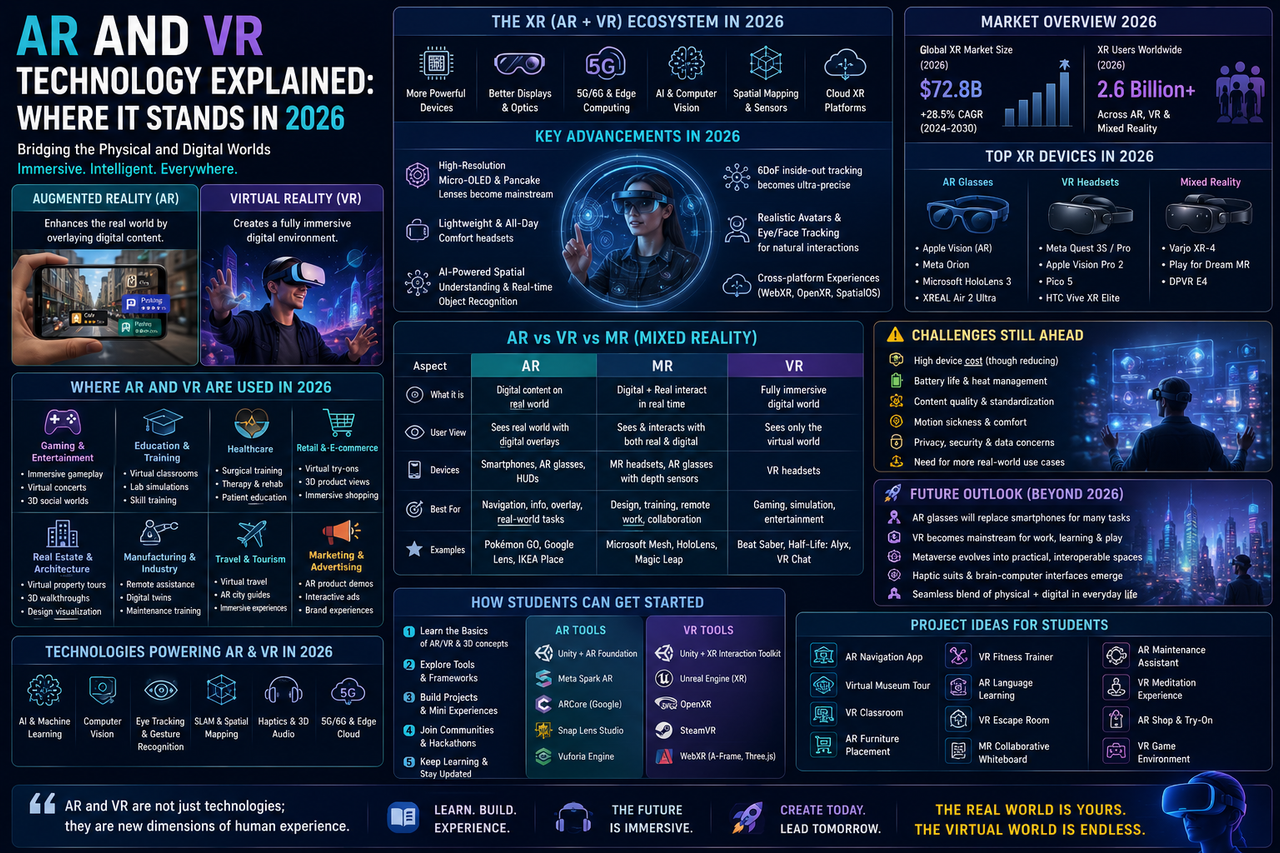
AR and VR Technology
Explained: Where It Stands in 2026
Augmented reality (AR) and
virtual reality (VR) have moved beyond gaming into practical business and
education applications by 2026, even as mainstream consumer adoption remains
gradual compared to earlier predictions.
Understanding the Difference
Between AR and VR
Augmented reality overlays
digital information onto the real world, typically through a phone camera or
smart glasses, while virtual reality creates a fully immersive digital
environment, usually experienced through a headset.
Where AR Is Being Used Today
● Retail apps that let users preview
furniture or products in their space
● Navigation and wayfinding overlays
● Industrial training and maintenance
guidance
● Educational apps that visualize
complex concepts
Where VR Is Being Used Today
● Immersive gaming and entertainment
experiences
● Virtual training simulations for
high-risk industries
● Virtual campus tours and remote
education
● Therapy and mental health
applications using controlled environments
Challenges Slowing Mainstream
Adoption
Cost of hardware, comfort during
extended use and a limited content ecosystem remain barriers to widespread AR
and VR adoption, even though enterprise use cases have matured significantly.
Opportunities for Students
and Developers
Students interested in this
space can explore AR/VR development using accessible tools and frameworks,
building projects like virtual campus tours, training simulations or
educational visualization tools that demonstrate practical, real-world value.
Final Verdict