Big Data Explained: A Beginner's Guide for 2026
Big data powers many of the technologies we use daily. Here is a simple, beginner-friendly explanation of big data concepts in 2026.
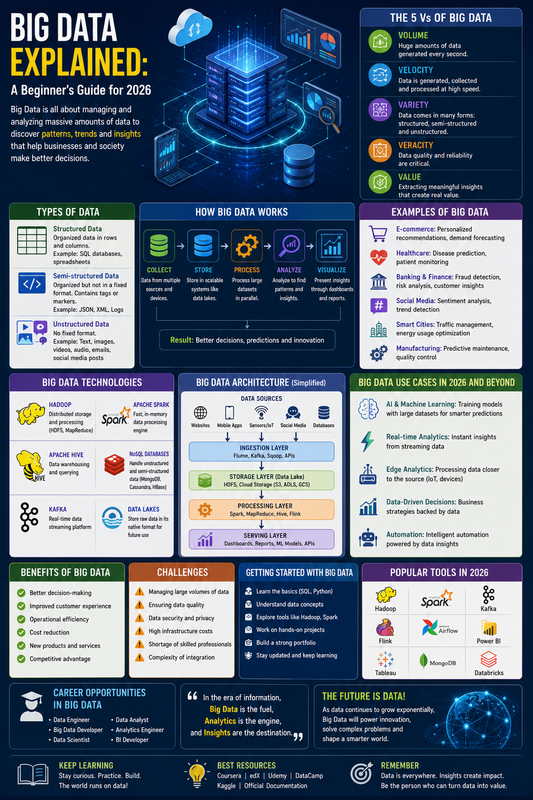
Big Data Explained: A
Beginner's Guide for 2026
Big data refers to datasets so
large and complex that traditional data processing methods struggle to handle
them efficiently. Understanding big data concepts remains valuable for students
interested in data-focused careers in 2026.
The Core Characteristics of
Big Data
Big data is often described
using three key characteristics: volume, referring to the sheer amount of data;
velocity, referring to how quickly data is generated; and variety, referring to
the different formats data can take, from structured databases to unstructured
text and media.
Why Big Data Matters
Businesses use big data to
understand customer behavior, optimize operations and make data-driven
decisions at a scale that would be impossible using traditional, smaller
datasets.
Common Tools Used in Big Data
Processing
● Distributed data processing
frameworks for handling large datasets
● Data warehousing solutions for
structured storage and querying
● Streaming platforms for handling
real-time data
● Cloud-based big data services
offered by major cloud providers
Difference Between Data
Science and Big Data Engineering
While data science focuses on
analyzing data to extract insights, big data engineering focuses on building
the infrastructure and pipelines needed to collect, store and process data at
scale, making the two closely related but distinct career paths.
Getting Started with Big Data
as a Student
Students can begin by learning
SQL and basic data processing concepts, then gradually explore distributed
computing frameworks through small-scale personal projects using publicly
available large datasets.
Final Verdict
Big data remains a foundational
concept behind many modern technologies in 2026. For students interested in
data engineering or data science, understanding these fundamentals opens the
door to a wide range of career opportunities.