Blockchain Technology Explained: A Beginner's Guide in 2026
Blockchain is no longer limited to cryptocurrency. Here is a simple guide to how blockchain works and where it is being used in 2026.
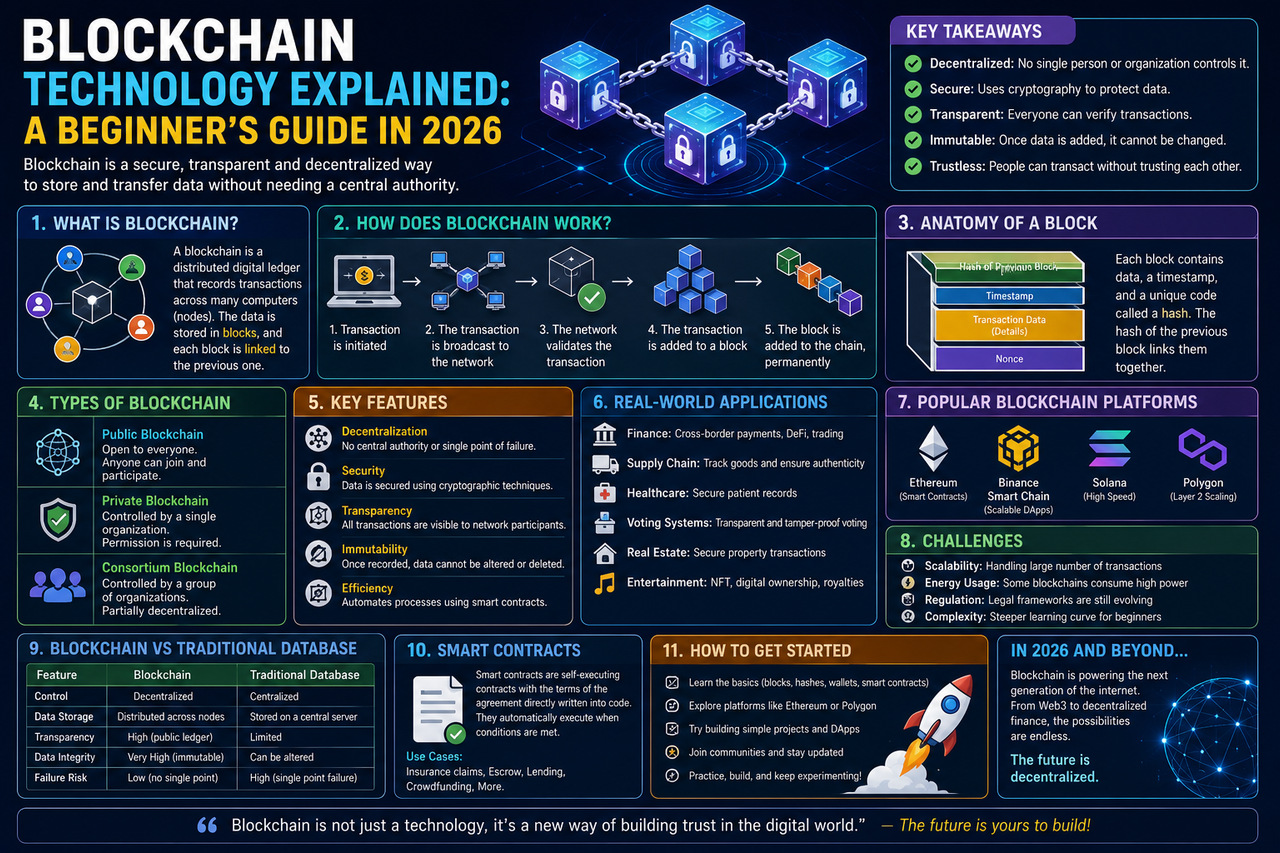
Blockchain
Technology Explained: A Beginner's Guide
Blockchain technology is often associated
only with cryptocurrency, but its underlying structure is being applied to
authentication, supply chain tracking and secure record-keeping across many
industries in 2026.
How
Blockchain Works
A blockchain is a distributed ledger made
up of blocks of data linked together using cryptographic hashes. Once a block
is added, altering it without detection becomes extremely difficult, which is
what makes blockchain useful for building trust.
Real-World
Applications
·
Product authentication and anti-counterfeiting
systems
·
Supply chain transparency
·
Secure academic and medical
record verification
·
Decentralized identity systems
·
Organ donation and healthcare
data tracking
Why
It Is Popular in Student Projects
Blockchain-based final-year projects,
such as authentication systems or organ donation platforms, are popular because
they demonstrate both security concepts and practical system design, which
evaluators and interviewers appreciate.
Final
Verdict
Blockchain has grown far beyond
cryptocurrency in 2026. For students and businesses alike, understanding its
core structure opens doors to building more secure and transparent systems.