Electric Vehicle Technology Trends in India in 2026
India's electric vehicle market continues to grow. Here are the key technology trends shaping EVs in India in 2026.
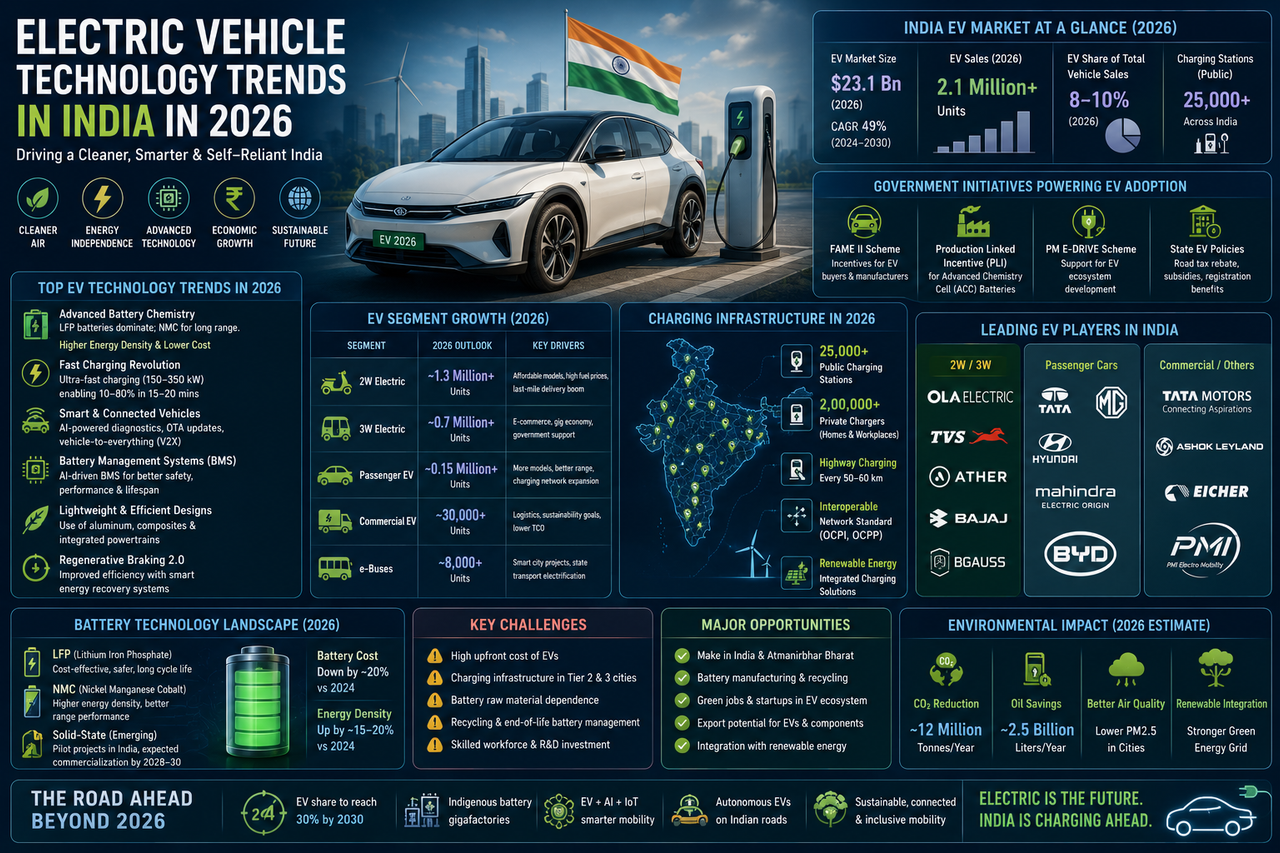
Electric Vehicle Technology
Trends in India in 2026
India's electric vehicle market
has continued expanding through 2026, driven by government incentives, growing
charging infrastructure and increasing consumer interest in both two-wheelers
and passenger vehicles.
Battery Technology
Improvements
Battery technology remains the
most critical factor in EV adoption. Improvements in energy density, charging
speed and battery lifespan have gradually reduced range anxiety, one of the
biggest concerns for Indian buyers.
Growth of Charging
Infrastructure
● Expansion of public charging
stations across highways and cities
● Growth of home and workplace
charging solutions
● Battery swapping stations,
especially for two-wheelers and commercial fleets
● Fast-charging technology reducing
charging time significantly
Government Policies
Supporting EV Adoption
Subsidies, tax benefits and
state-level EV policies have played a significant role in making electric
vehicles more affordable, particularly in the two-wheeler and three-wheeler
segments.
Challenges That Remain
● Higher upfront cost compared to
conventional vehicles
● Uneven charging infrastructure
outside major cities
● Battery recycling and disposal
concerns
● Limited availability of certain EV
models and variants
Opportunities for Engineering
Students
Students interested in EV
technology can explore projects related to battery management systems, charging
station monitoring, EV route optimization or motor control systems, all of
which are highly relevant to this growing industry.
Final Verdict
Electric vehicle technology in
India is progressing steadily in 2026, supported by improving infrastructure
and policy support. For students, this remains a promising area for both
projects and long-term career opportunities.