Ethical Hacking Career Guide for Students in 2026
Interested in cybersecurity? Here is a complete guide to starting a career in ethical hacking, including skills, certifications and career paths.
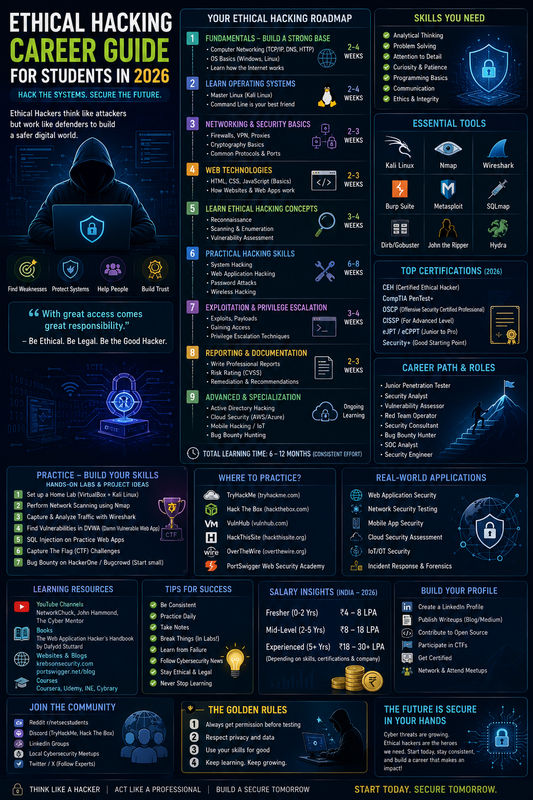
Ethical Hacking Career Guide
for Students in 2026
Ethical hacking, also known as
penetration testing, continues to be a growing career path as organizations
invest heavily in identifying security vulnerabilities before malicious
attackers can exploit them.
What Ethical Hackers Actually
Do
Ethical hackers are hired to
legally attempt to breach an organization's systems, networks or applications
in order to identify weaknesses, which are then reported and fixed before real
attackers can exploit them.
Core Skills Required
● Strong understanding of networking
fundamentals
● Knowledge of operating systems,
particularly Linux
● Familiarity with common
vulnerabilities and attack techniques
● Scripting skills in languages like
Python or Bash
● Understanding of web application
security concepts
Certifications Worth
Considering
While practical skills matter
most, industry-recognized certifications can help validate knowledge and
improve job prospects, particularly for students without prior professional experience
in security roles.
Building Practical Experience
● Participating in capture-the-flag
(CTF) competitions
● Setting up a home lab to practice
safely and legally
● Contributing to bug bounty programs
on eligible platforms
● Building security-focused final-year
projects, such as vulnerability scanners
Ethical and Legal
Considerations
It is essential for students to
understand that ethical hacking must always be performed with proper
authorization. Practicing hacking techniques on systems without permission is
illegal, regardless of intent.
Final Verdict