Fintech Innovations Shaping India in 2026
India's fintech sector continues to innovate rapidly. Here are the key trends shaping digital finance and payments in 2026.
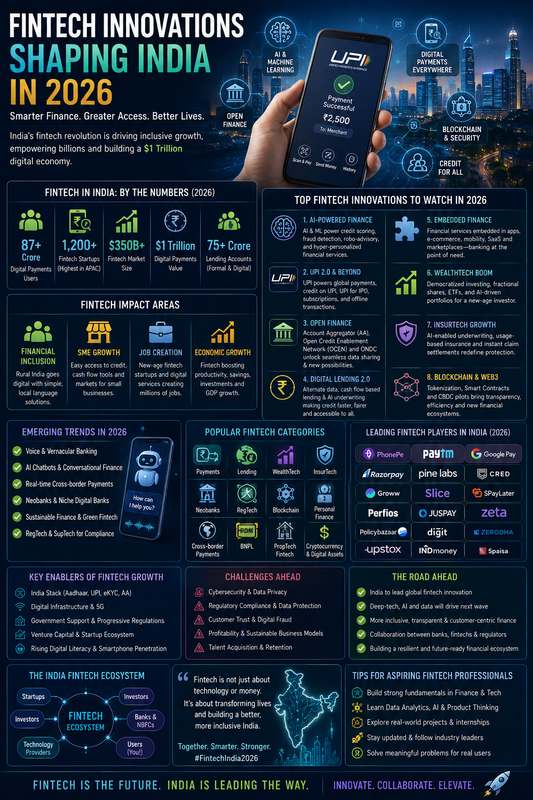
Fintech Innovations Shaping
India in 2026
India's fintech sector has
continued to expand rapidly, driven by widespread digital payment adoption,
growing financial inclusion efforts and increasing use of technology in
lending, insurance and investment platforms.
Digital Payments Continue to
Dominate
Digital payment systems remain
central to India's fintech growth, with continued expansion into smaller towns
and rural areas, supported by increasingly user-friendly mobile interfaces.
Emerging Fintech Trends in
2026
● AI-driven credit scoring for
underserved populations
● Growth of embedded finance within
non-financial apps
● Expansion of digital lending
platforms for small businesses
● Increased use of technology in
insurance and claims processing
● Growth of investment and wealth
management apps for younger users
Financial Inclusion Through
Technology
Fintech has played a significant
role in bringing formal financial services to previously underserved
populations, using mobile-first platforms and simplified onboarding processes
to reach a wider audience.
Regulatory Developments
Affecting Fintech
As the fintech sector grows,
regulatory frameworks around data privacy, digital lending practices and
consumer protection continue to evolve, shaping how fintech companies design
their products and services.
Opportunities for Students in
Fintech
Students interested in fintech
can explore projects related to secure payment systems, budgeting applications
or basic lending platforms, combining software development skills with an
understanding of financial systems.
Final Verdict
Fintech in India continues to be
one of the most dynamic technology sectors in 2026, driven by innovation in
payments, lending and financial inclusion. For students, it offers strong
opportunities at the intersection of technology and finance.