ISRO Missions in 2026: CMS-03 Satellite Launch and What's Coming Next
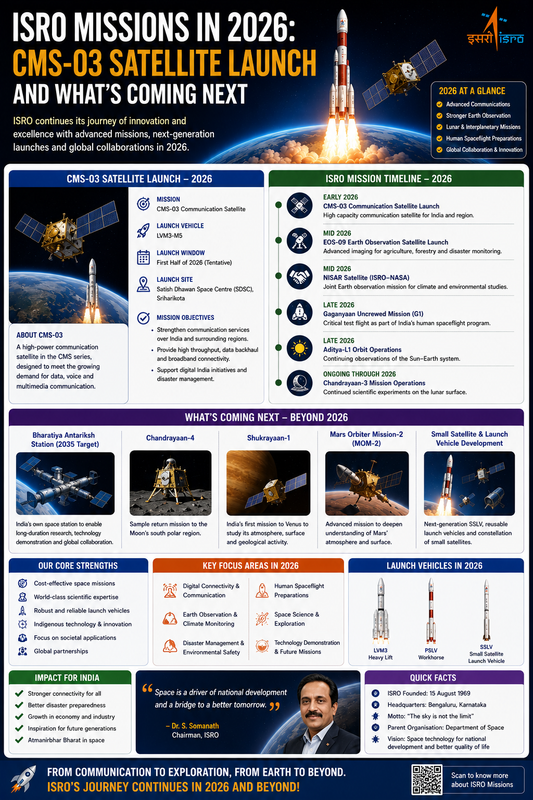
ISRO has an active mission schedule in 2026, including the CMS-03 satellite launch. Here is an overview of key missions planned for the year.
ISRO
Missions in 2026: CMS-03 Satellite Launch and What's Coming Next
ISRO has maintained an active mission
schedule throughout 2026, with Chairman V Narayanan publicly stating the organisation's
plans to send a large number of satellites into orbit during the year,
alongside continued progress on the Gaganyaan human spaceflight programme and
other strategically important projects.
About
the CMS-03 Satellite Mission
CMS-03 is part of ISRO's ongoing
communication satellite series, designed to strengthen India's satellite
communication capabilities. Communication satellites like CMS-03 play a
critical role in supporting broadcasting, telecommunications, internet
connectivity in remote areas, and strategic communication needs across the
country, forming a largely invisible but essential layer of India's digital and
communication infrastructure.
Why
Communication Satellites Matter So Much
While missions like Chandrayaan and
Gaganyaan tend to capture public attention, communication satellites like
CMS-03 quietly support everyday services relied upon by millions of people,
from television broadcasting to disaster-response communication networks in
regions where traditional infrastructure may be unreliable or absent. Expanding
this satellite fleet is essential to supporting India's growing digital economy
and communication needs.
Other
Key Missions ISRO Is Working On in 2026
·
Continued uncrewed test flights
under the Gaganyaan human spaceflight programme, representing some of the most
closely watched missions of the year
·
Multiple satellite launches
supporting communication, navigation and Earth observation, contributing to
weather forecasting, agriculture monitoring and disaster management capabilities
·
Ongoing collaboration with
international space agencies on joint missions, including Earth observation
missions developed in partnership with other national space agencies
·
Continued progress toward
long-term strategic goals, including work supporting India's eventual space
station, the Bharatiya Antariksha Station
How
ISRO Plans and Prioritizes Its Mission Schedule
ISRO's mission planning typically
balances several priorities simultaneously: fulfilling operational satellite
needs for communication and Earth observation, advancing strategic long-term
programmes like Gaganyaan, and pursuing scientific exploration missions. This
balancing act means that in any given year, ISRO's public announcements often
include both routine, high-frequency satellite launches and a smaller number of
headline-grabbing exploratory or human spaceflight milestones.
Why
ISRO's Mission Pace Matters
A busy launch schedule reflects ISRO's
growing operational capacity and its expanding role in both civilian and
strategic satellite infrastructure, which has practical benefits ranging from
improved communication networks to better disaster monitoring capabilities. It
also reflects growing confidence in India's launch vehicle reliability,
allowing the agency to plan a denser mission calendar than in earlier decades.
How
to Stay Updated on ISRO Missions
Students and space enthusiasts can follow
ISRO's official website and official social media channels for real-time
updates on launch schedules, mission outcomes and new satellite deployments
throughout the year, since launch dates and mission details are sometimes
adjusted close to the actual launch window based on technical readiness and
weather conditions.
Relevance
for Engineering Students
ISRO's active mission schedule creates a
strong backdrop for students interested in satellite technology, communication
systems or aerospace engineering to explore related final-year projects,
internships or long-term career paths. Understanding the range of missions ISRO
handles, from routine communication satellites to headline human spaceflight
programmes, also helps students identify which specific area of space
technology genuinely interests them most.
Final
Verdict