Open Source Contribution Guide for Students in 2026
Contributing to open source is one of the best ways for students to build real-world coding experience. Here is a beginner-friendly guide for 2026.
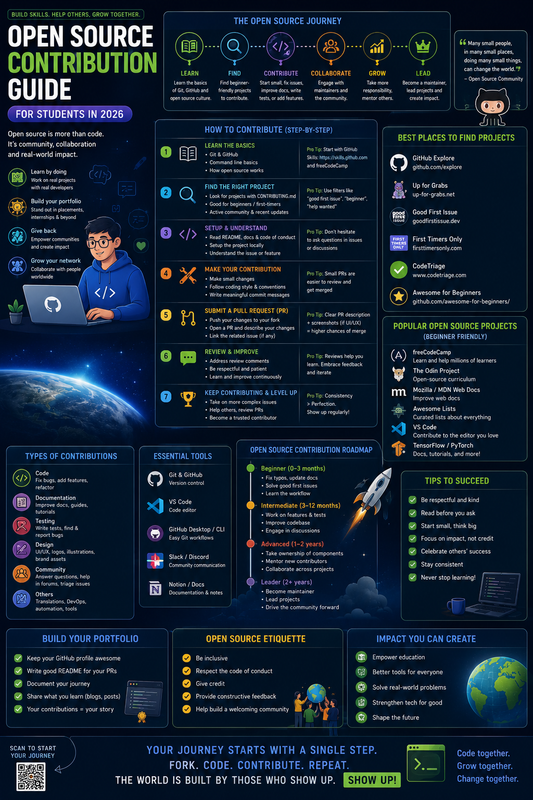
Open Source Contribution
Guide for Students in 2026
Contributing to open source
projects is one of the most effective ways for engineering students to gain
real-world coding experience, collaborate with other developers and build a
portfolio that stands out to recruiters.
Why Open Source Matters for
Students
Unlike academic assignments,
open source projects involve real codebases used by real people, exposing
students to code review processes, collaboration workflows and
industry-standard coding practices.
How to Find the Right Project
to Contribute To
● Start with projects you already use
and understand
● Look for repositories tagged with
"good first issue" or "beginner-friendly"
● Join communities around technologies
you are learning, such as a specific framework or library
● Consider contributing to
documentation before tackling complex code changes
Steps to Make Your First
Contribution
1. Fork the repository and set it up locally
2. Read the contribution guidelines carefully
3. Pick a small, well-defined issue to work on
4. Write clean, well-documented code following the project's
style
5. Submit a pull request with a clear description of your
changes
Building a Strong GitHub
Profile
Consistent contributions, clear
commit messages and well-documented personal projects together create a GitHub
profile that recruiters and interviewers often review during the hiring
process.
Common Mistakes Beginners
Make
● Attempting overly complex issues
before understanding the codebase
● Ignoring the project's coding style
and guidelines
● Not communicating clearly in pull
requests or issue discussions
● Giving up after one rejected or
unmerged pull request
Final Verdict
Open source contribution in 2026
remains one of the most valuable, low-cost ways for students to gain practical
experience, build credibility and stand out in a competitive job market.