Resume and LinkedIn Optimization Guide for Tech Students in 2026
A strong resume and LinkedIn profile can make a real difference in placements. Here is a practical optimization guide for tech students in 2026.
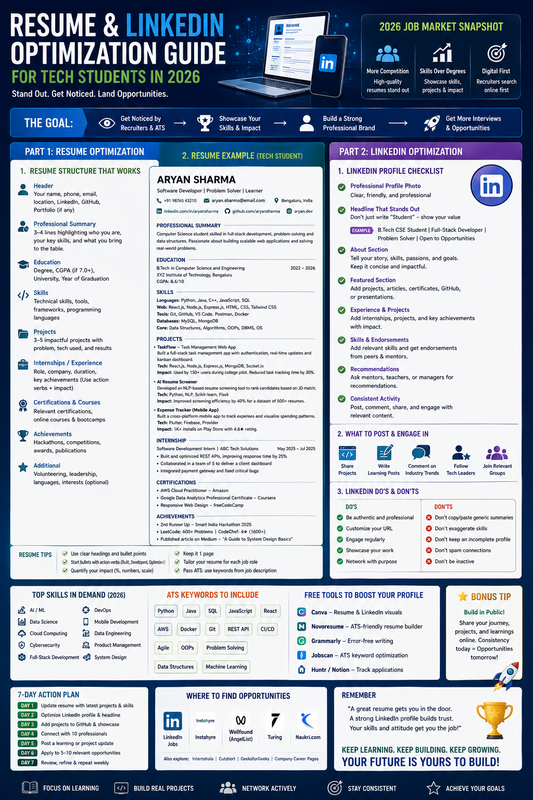
Resume and LinkedIn
Optimization Guide for Tech Students in 2026
With placement competition
remaining intense, a well-optimized resume and LinkedIn profile can
significantly influence whether a student gets noticed by recruiters in 2026.
Small, strategic improvements often make a bigger difference than adding more
content.
Structuring a Strong
Technical Resume
A strong resume should clearly
highlight technical skills, relevant projects and any internships or practical
experience, organized in a clean, easy-to-scan format that recruiters can
review quickly.
What Recruiters Actually Look
For
● Clear, quantifiable project
descriptions rather than vague statements
● Relevant technical skills matched to
the roles being applied for
● Evidence of practical experience,
such as internships or open source contributions
● A clean, professional format free of
unnecessary design clutter
Common Resume Mistakes to
Avoid
● Listing every technology ever
touched instead of focusing on relevant skills
● Vague project descriptions that
don't explain the actual contribution or impact
● Spelling and formatting
inconsistencies
● Resumes longer than necessary for an
entry-level position
Optimizing a LinkedIn Profile
for Visibility
A complete LinkedIn profile with
a clear headline, detailed project descriptions and consistent activity, such
as sharing project updates or relevant industry content, tends to attract more
recruiter attention than an inactive, incomplete profile.
Building Credibility Through
Consistent Activity
Regularly posting about
projects, certifications or learning milestones helps build a visible, credible
professional presence over time, rather than relying solely on a static
profile.
Final Verdict
In 2026, a well-structured
resume paired with an active, detailed LinkedIn profile remains one of the most
effective ways for tech students to improve their visibility to recruiters and
stand out in a competitive job market.