Semiconductor Chip Industry Explained: Why It Matters in 2026
Semiconductor chips power almost every piece of modern technology. Here is a simple explanation of the chip industry and why India is investing in it.
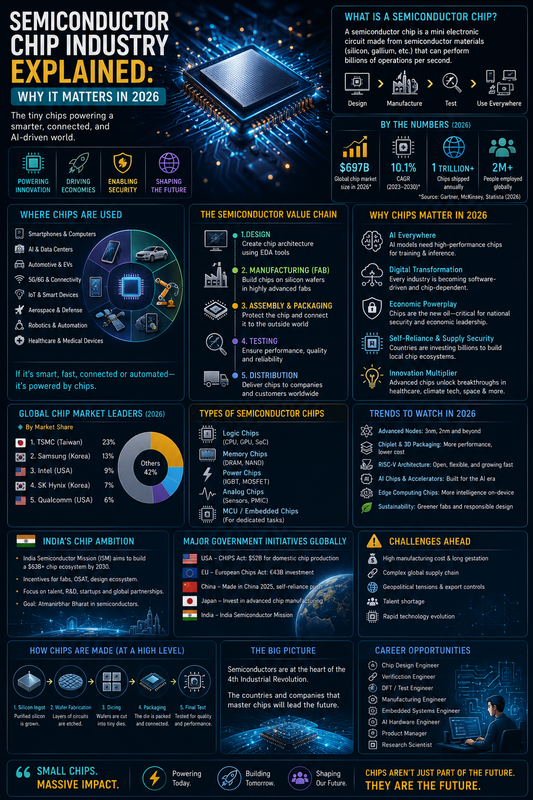
Semiconductor Chip Industry
Explained: Why It Matters in 2026
Semiconductor chips power nearly
every piece of modern technology, from smartphones and laptops to electric
vehicles and industrial machinery. India has been steadily investing in
building its own semiconductor manufacturing and design capabilities.
Why Semiconductors Are So
Important
Chips are the foundational
hardware behind computing, and global supply chain disruptions in recent years
highlighted how dependent modern economies are on a stable, secure supply of
semiconductors.
India's Growing Role in the
Semiconductor Industry
● Government incentives supporting
semiconductor manufacturing investments
● Growth in chip design and VLSI
engineering job opportunities
● Partnerships between global chip
companies and Indian manufacturing facilities
● Expansion of semiconductor-focused
research and academic programs
Career Opportunities in the
Chip Industry
Students interested in this
field can explore roles in VLSI design, embedded systems, chip verification and
semiconductor manufacturing processes, which are increasingly in demand as
India builds out its domestic chip ecosystem.
Skills Needed for a Career in
Semiconductors
A strong foundation in digital
electronics, computer architecture and hardware description languages is
essential for students aiming for chip design or VLSI-focused roles.
Why This Matters for
Engineering Students
As India's semiconductor sector
grows, students with even foundational knowledge of chip design and embedded
systems may find themselves well-positioned for a niche but rapidly expanding
job market.
Final Verdict
The semiconductor industry in
2026 represents one of India's most strategically important growth sectors. For
engineering students with an interest in hardware and electronics, it offers a
promising and increasingly relevant career path.