Smart City Technology in India: Progress and Challenges in 2026
India's smart city initiatives continue to evolve. Here is an overview of the technology being used and the challenges still being addressed in 2026.
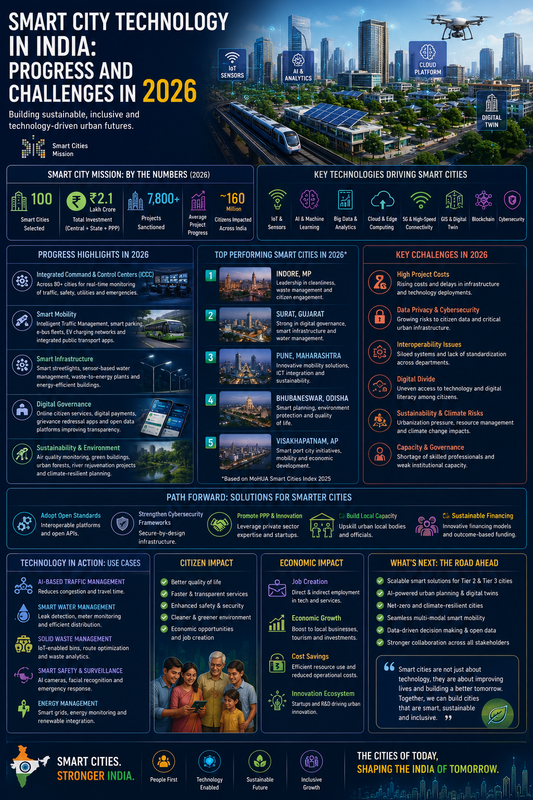
Smart City Technology in
India: Progress and Challenges in 2026
India's smart city initiatives
have continued to develop across major and mid-sized cities, integrating
technology into traffic management, utilities and public safety systems, though
progress varies significantly between regions.
Key Areas of Smart City
Implementation
● Intelligent traffic management and
signal optimization systems
● Smart utility monitoring for water
and electricity usage
● Public safety systems using
connected surveillance and alert systems
● Digital governance platforms for
citizen services
● Waste management systems using
IoT-based monitoring
Technology Powering Smart
Cities
Smart city systems typically
rely on a combination of IoT sensors, centralized data platforms and analytics
dashboards that allow city administrators to monitor and respond to issues in
near real time.
Challenges Facing Smart City
Projects
Despite genuine progress, many
smart city initiatives face challenges around funding, maintenance of installed
infrastructure, data privacy concerns and ensuring systems remain functional
over the long term rather than only during initial rollout.
Opportunities for Students
Students interested in smart
city technology can explore projects related to traffic monitoring systems,
smart utility dashboards or waste management tracking, which combine IoT, data
analytics and practical civic problem-solving.
Why This Area Is Worth
Following
As urban populations continue
growing, smart city technology will likely play an increasingly important role
in managing infrastructure efficiently, making it a relevant area for students
interested in both technology and public impact.
Final Verdict