Social Media Addiction: Signs, Causes and How to Break Free in 2026
Struggling to put your phone down? Here is a clear look at the signs and causes of social media addiction, along with practical steps to regain control.
Social
Media Addiction: Signs, Causes and How to Break Free in 2026
Social media addiction has become an
increasingly discussed topic as platforms are designed to maximize engagement,
often using techniques specifically built to keep users scrolling far longer
than they originally intended.
Why
Social Media Is Designed to Be Habit-Forming
Features like infinite scrolling,
unpredictable content recommendations and notification-based rewards tap into
the brain's natural response to unpredictable rewards, similar to mechanisms
seen in other habit-forming behaviors. This is not accidental; platform
algorithms are optimized around time spent and engagement, which naturally
encourages compulsive usage patterns for many users.
Common
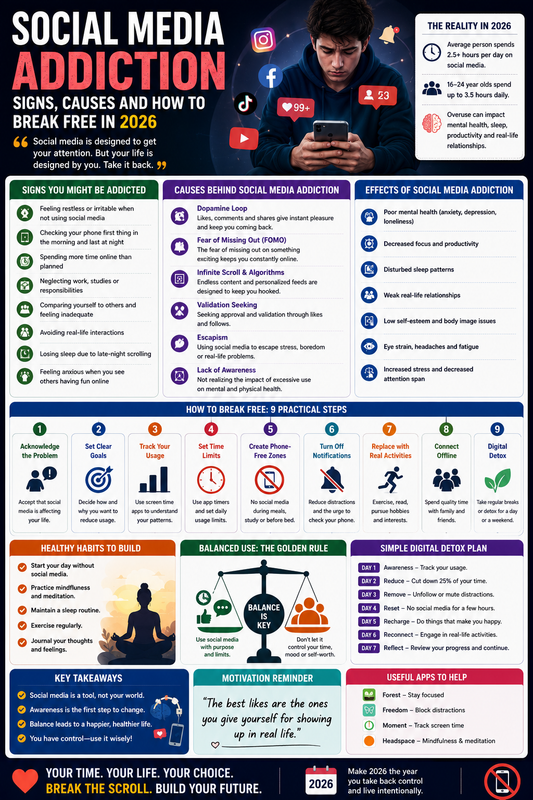
Signs of Social Media Addiction
·
Feeling anxious or restless
when unable to check social media for extended periods
·
Spending significantly more
time on platforms than originally intended
·
Checking social media first
thing in the morning and last thing before sleep
·
Difficulty concentrating on
work or studies due to the urge to check notifications
·
Using social media as a primary
way to cope with boredom, stress or negative emotions
Underlying
Causes Behind Compulsive Use
Beyond platform design, social media
addiction often connects to deeper factors like the need for social validation,
fear of missing out on social events or trends, and using scrolling as an
escape from stress, loneliness or difficult emotions.
Practical
Strategies to Regain Control
·
Set specific, realistic time
limits using built-in screen time tracking features on your phone
·
Turn off non-essential
notifications to reduce the constant pull toward checking your phone
·
Designate specific phone-free
times, such as during meals or the first hour after waking up
·
Replace scrolling habits with
alternative activities, such as reading, exercise or hobbies you genuinely
enjoy
·
Be intentional about why you're
opening an app, rather than opening it automatically out of habit
When
to Seek Additional Support
If social media use is significantly
interfering with daily responsibilities, relationships or overall wellbeing
despite genuine efforts to cut back, it can help to talk to a counselor or
mental health professional who can provide personalized strategies and support.
Final
Verdict
Social media addiction in 2026 remains a
real and widely experienced challenge, largely by design. Recognizing the signs
early and building intentional habits around usage can help most people regain
a healthier, more balanced relationship with these platforms.
If this topic feels personally relevant
and you're finding it difficult to manage on your own, it may help to speak
with a mental health professional who can offer support tailored to your
situation.