Social Media Bans for Minors: What's Happening Around the World in 2026
Several countries have introduced social media restrictions for minors. Here is an overview of these laws and the debate surrounding them in 2026.
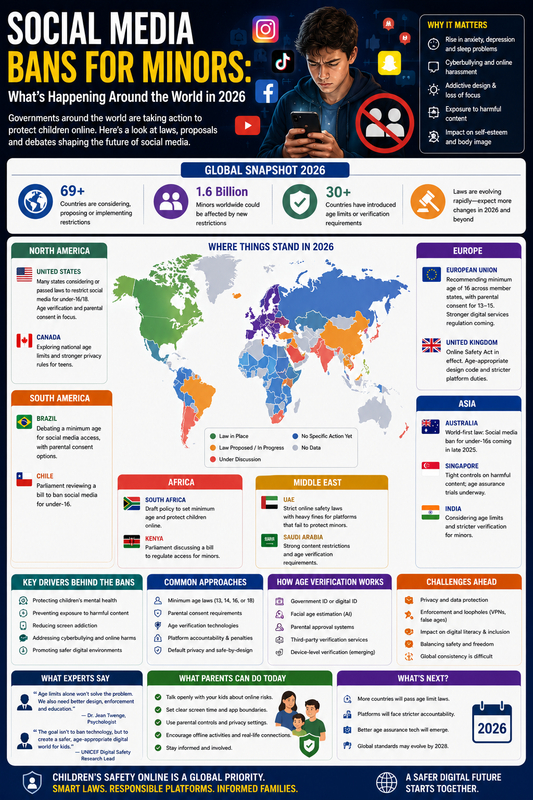
Social
Media Bans for Minors: What's Happening Around the World in 2026
Concerns about the impact of social media
on children and teenagers have led several governments to introduce age-based
restrictions and outright bans for minors, sparking a global debate about how
best to protect young users without cutting them off from legitimate benefits
of online connection.
Why
Governments Are Introducing These Restrictions
Policymakers cite growing concerns about
the impact of social media on youth mental health, exposure to harmful content,
cyberbullying, and the addictive design of many platforms as key reasons behind
these restrictions, often citing research linking heavy social media use among
teenagers to increased rates of anxiety and depression.
Approaches
Different Countries Are Taking
·
Some countries have introduced
outright minimum age requirements for holding social media accounts, requiring
platforms to verify user age
·
Others are focusing on parental
consent requirements for users below a certain age
·
Some regions have introduced
restrictions specifically targeting algorithm-driven content recommendations
for younger users
·
Certain jurisdictions have
proposed or implemented restrictions at a state or regional level rather than
nationally
Challenges
in Enforcing These Bans
Age verification remains one of the most
significant practical challenges, since many current methods can be relatively
easy for tech-savvy teenagers to bypass. Platforms and regulators continue
debating the most effective and privacy-respecting way to verify a user's
actual age without requiring invasive personal documentation.
Arguments
in Favor of These Restrictions
Supporters argue that these measures are
necessary given growing evidence connecting heavy social media use to mental
health struggles among young people, and that platforms have shown limited
willingness to voluntarily change addictive design features without regulatory
pressure.
Arguments
Against Blanket Bans
Critics argue that outright bans may push
young users toward less regulated platforms or private group chats with even
less oversight, and that a better approach might focus on redesigning platforms
to be less addictive and more age-appropriate rather than restricting access
entirely.
What
This Means for Parents and Educators
Regardless of specific legal requirements
in a given region, many parents and educators are increasingly focused on
having open conversations with young people about healthy social media use,
rather than relying solely on legal restrictions or app-based blocking tools.
Final
Verdict