Social Media for Students: Advantages, Disadvantages and Balanced Use
: Is social media good or bad for students? Here is a balanced look at its advantages, disadvantages and how students can use it more effectively.
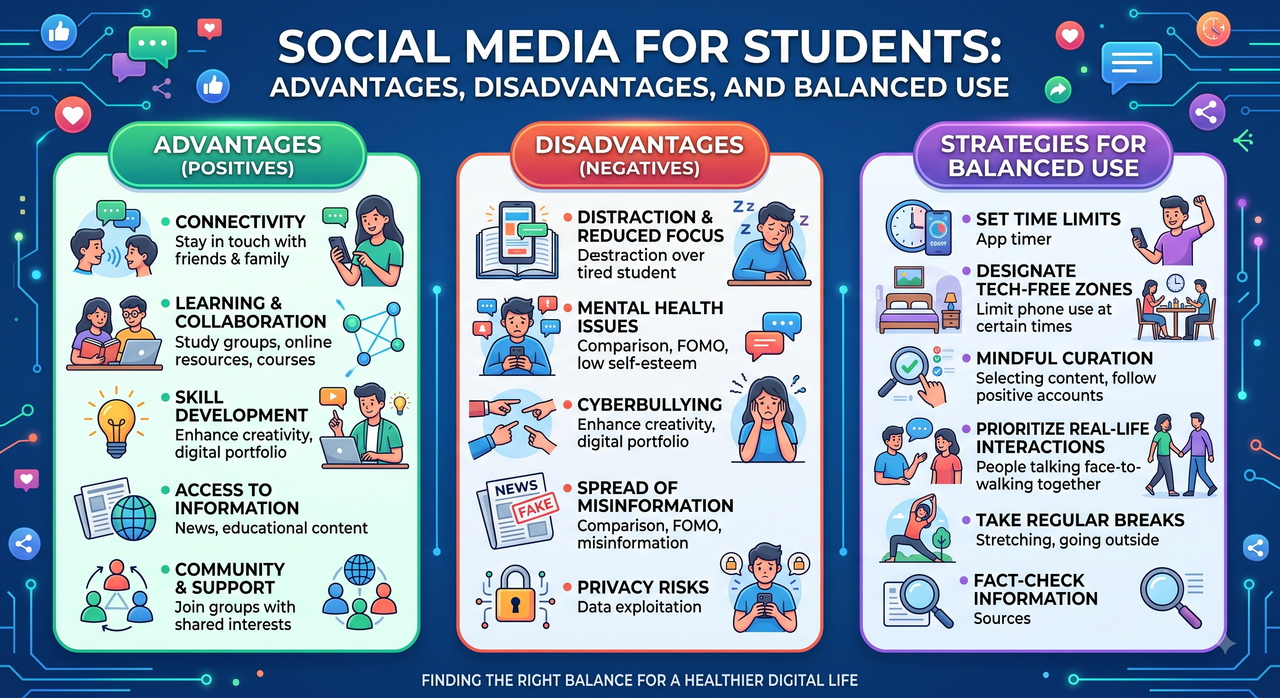
Social
Media for Students: Advantages, Disadvantages and Balanced Use
Social media plays a significant role in
the daily lives of most students today, offering genuine educational and
networking benefits alongside well-documented risks around distraction,
comparison and time management.
Genuine
Advantages for Students
·
Access to educational content,
tutorials and study communities across nearly every subject and skill area
·
Opportunities to build a
professional network and personal brand early, particularly relevant for
career-focused platforms
·
Exposure to diverse
perspectives, current events and global conversations beyond the classroom
·
A platform to showcase academic
projects, creative work or personal achievements to a wider audience
·
Easy access to peer support
groups and study communities for exam preparation and academic collaboration
Real
Disadvantages Students Should Be Aware Of
·
Significant potential for
distraction, particularly during study time or exam preparation periods
·
Social comparison pressure
related to academic achievements, appearance or lifestyle
·
Time management challenges,
since social media's habit-forming design can consume more time than intended
·
Exposure to misinformation or
low-quality content that can be mistaken for credible information
·
Potential impact on sleep
quality due to late-night usage, which directly affects academic performance
and focus
How
Students Can Use Social Media More Effectively
·
Follow accounts genuinely
related to academic or career interests, rather than only entertainment-focused
content
·
Set specific, limited times for
social media use, particularly during study periods and exam preparation
·
Use platform features like
screen time tracking to stay aware of actual usage patterns
·
Be selective about following
accounts that reflect genuine interests rather than accounts that consistently
trigger comparison or anxiety
·
Consider using social media
proactively for building a professional presence, rather than only passive
consumption
Practical
Dos and Don'ts for Students
·
Do use social media to connect with
academic communities and mentors in your field of interest
·
Do take regular breaks from scrolling
during study sessions to maintain focus
·
Don't let social media use interfere
with sleep, particularly before exams
·
Don't base your self-worth on likes,
comments or follower counts
Final
Verdict