Software Engineer Jobs in 2026: Where to Find the Best Opportunities
Looking for software engineering jobs in 2026? Here is a complete guide to where the best opportunities are and how to position yourself for them.
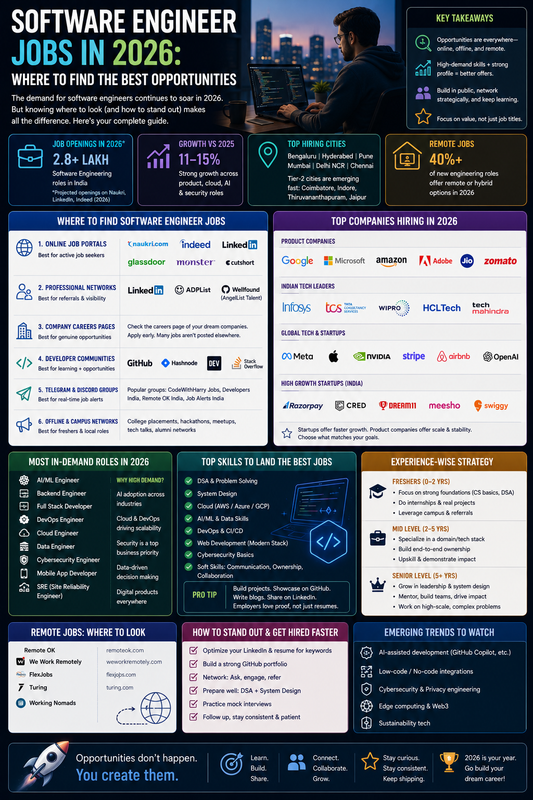
Software
Engineer Jobs in 2026: Where to Find the Best Opportunities
The software engineering job market in
2026 remains active but increasingly competitive, with companies placing greater
emphasis on practical demonstrated skills alongside academic qualifications
when evaluating candidates.
Understanding
the Current Job Market
While overall demand for software
engineers remains strong, hiring processes have become more selective, with
companies often prioritizing candidates who can demonstrate practical
problem-solving ability through projects, open source contributions or prior
experience, rather than relying purely on academic credentials.
Types
of Software Engineering Roles Available
·
Backend development roles, focused on
server-side logic, databases and system architecture
·
Frontend development roles, focused on
building user interfaces and user experience
·
Full-stack roles, combining both
frontend and backend responsibilities
·
Mobile development roles, focused on
Android, iOS or cross-platform app development
·
DevOps and infrastructure roles, focused
on deployment pipelines and cloud infrastructure
·
Specialized roles, including machine
learning engineering, data engineering and security engineering
Where
to Look for Software Engineering Jobs
·
Company career pages,
particularly for product-based companies and well-funded startups with active
hiring
·
Professional networking
platforms, where recruiters often post roles and where an active, well-maintained
profile can attract inbound opportunities
·
Campus placement drives for
students at colleges with strong industry partnerships
·
Referrals through personal and
professional networks, which often carry a higher success rate than cold
applications
·
Specialized tech job platforms
that focus specifically on engineering and technical roles
What
Companies Are Actually Looking For in 2026
·
Strong problem-solving ability,
typically assessed through coding interviews and system design discussions
·
Practical experience
demonstrated through personal projects, internships or open source
contributions
·
Familiarity with modern
development practices, including version control, testing and collaborative
workflows
·
Communication skills and the
ability to explain technical decisions clearly
·
Adaptability and willingness to
learn new technologies as the field continues evolving
How
to Stand Out as a Candidate
·
Build a portfolio of genuine,
well-documented projects rather than relying solely on coursework
·
Contribute to open source
projects to demonstrate real-world collaborative coding experience
·
Prepare thoroughly for
technical interviews, including both coding and system design components
·
Maintain an active, detailed
professional profile that clearly communicates your skills and experience
·
Network genuinely within your
target industry rather than relying solely on cold applications
Common
Mistakes Job Seekers Make
·
Applying broadly without
tailoring resumes or applications to specific roles
·
Underpreparing for technical
interviews, particularly system design rounds for more experienced roles
·
Neglecting to build a visible
portfolio of practical work
·
Ignoring the value of
networking and referrals in favor of cold applications alone
Final
Verdict
Software engineering jobs remain plentiful
in 2026 for candidates who can demonstrate genuine, practical skill beyond
academic credentials alone. Building a strong portfolio, preparing thoroughly
for technical interviews and actively networking within the industry
significantly improves the chances of landing strong opportunities.