Bank Fraud Detection System
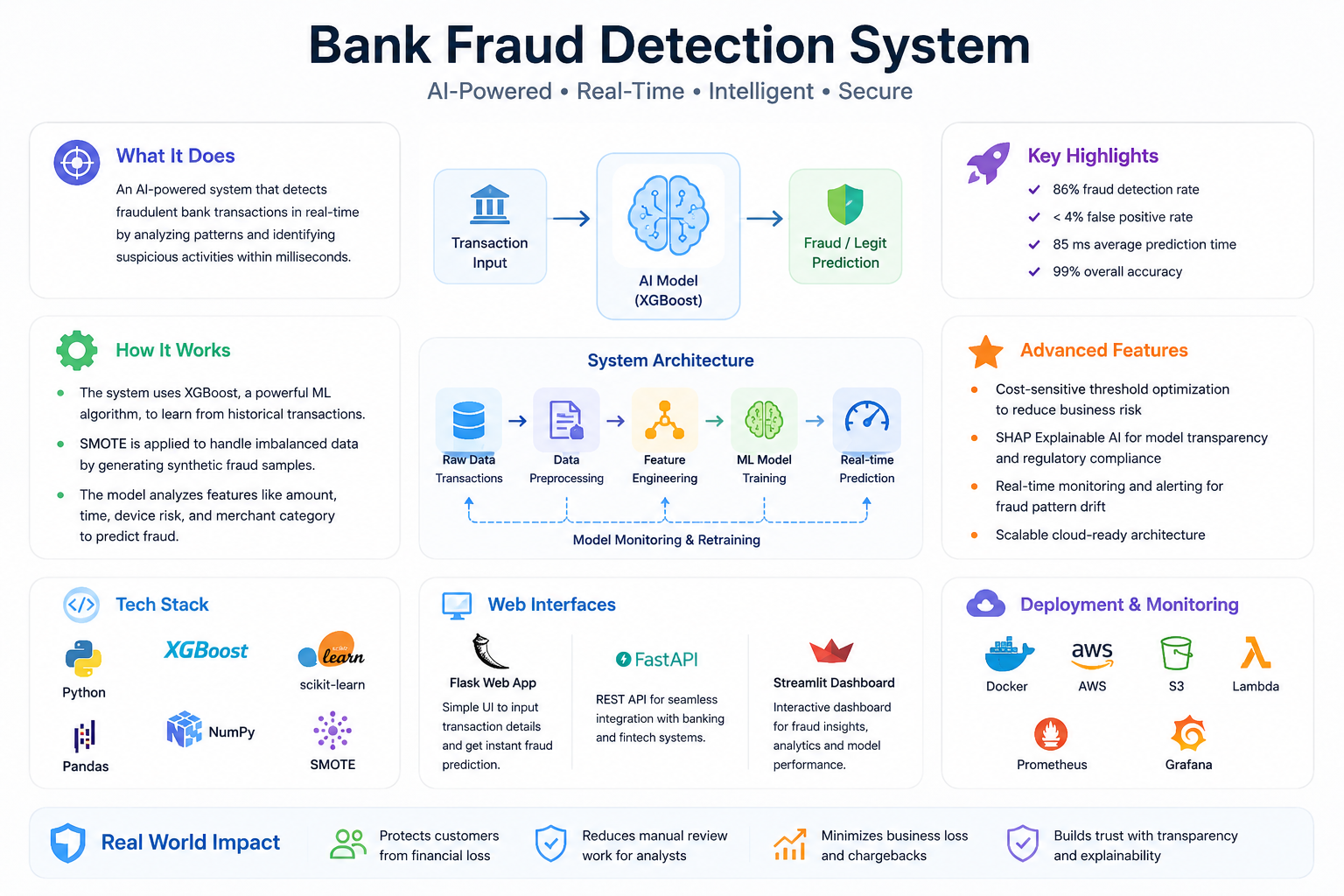
The Bank Fraud Detection System is not just a normal machine learning project — it is a complete AI-powered security solution designed to detect fraudulent bank transactions in real time. The main goal of this project is to protect users and financial institutions from online payment fraud by intelligently analyzing transaction patterns and identifying suspicious activities within milliseconds.
What makes this project powerful is the use of advanced Artificial Intelligence and Machine Learning technologies. The system is built using Python 3.11 along with popular data science libraries such as Pandas, NumPy, Scikit-learn, and XGBoost. These technologies help process large amounts of transaction data, train the fraud detection model, and generate accurate predictions efficiently.
At the core of the project, we used the XGBoost algorithm, one of the most advanced and high-performance machine learning models widely used in fintech industries. Instead of depending on simple rules, the model learns fraud patterns from thousands of previous transactions. It studies factors such as transaction amount, transaction timing, device risk score, and merchant category to decide whether a transaction is legitimate or suspicious.
One of the biggest challenges in fraud detection is that fraudulent transactions are extremely rare compared to normal transactions. To solve this real-world problem, we implemented SMOTE (Synthetic Minority Over-sampling Technique). This advanced technique artificially generates fraud samples so the model gets enough exposure to fraud patterns during training. This significantly improves the system’s ability to identify fraud accurately.
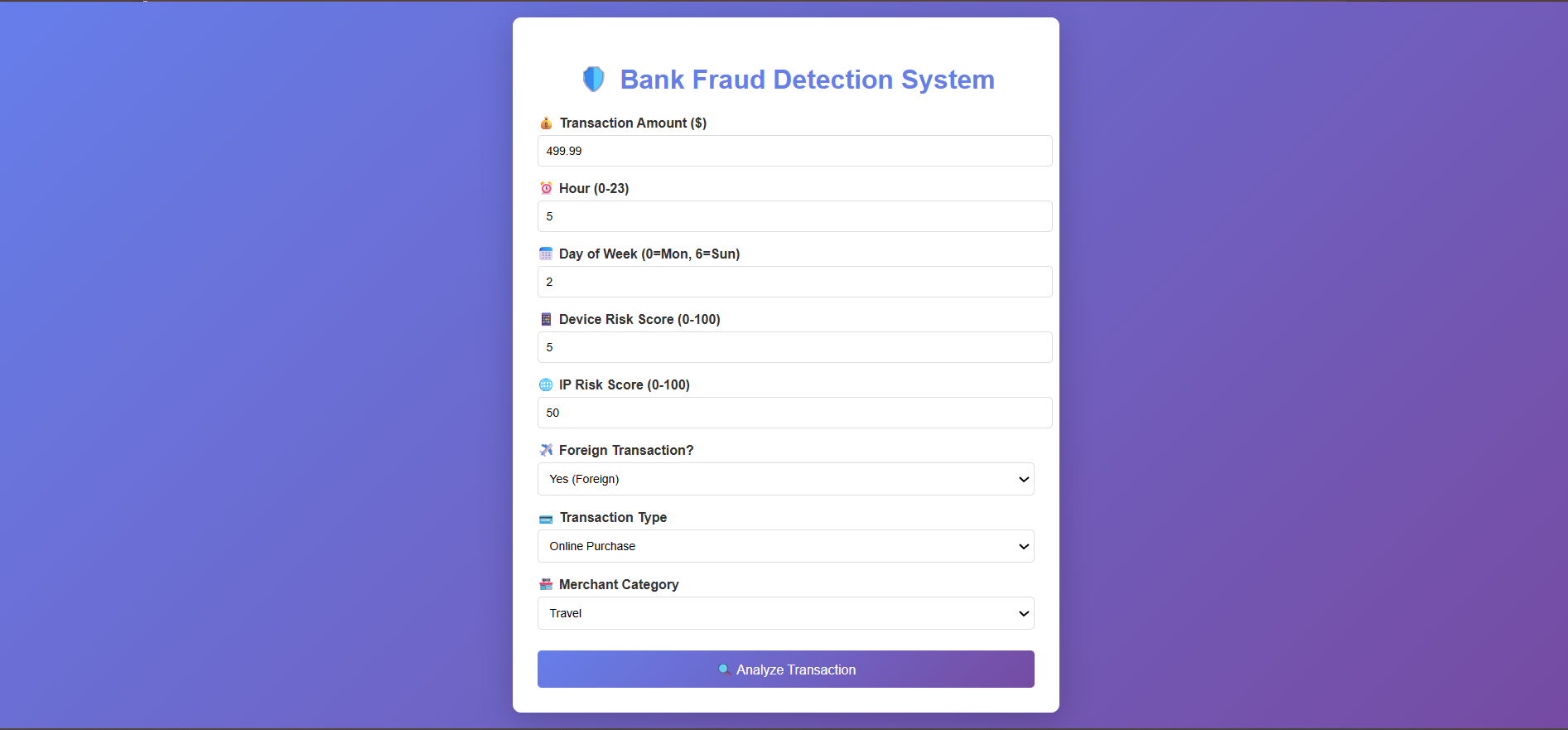
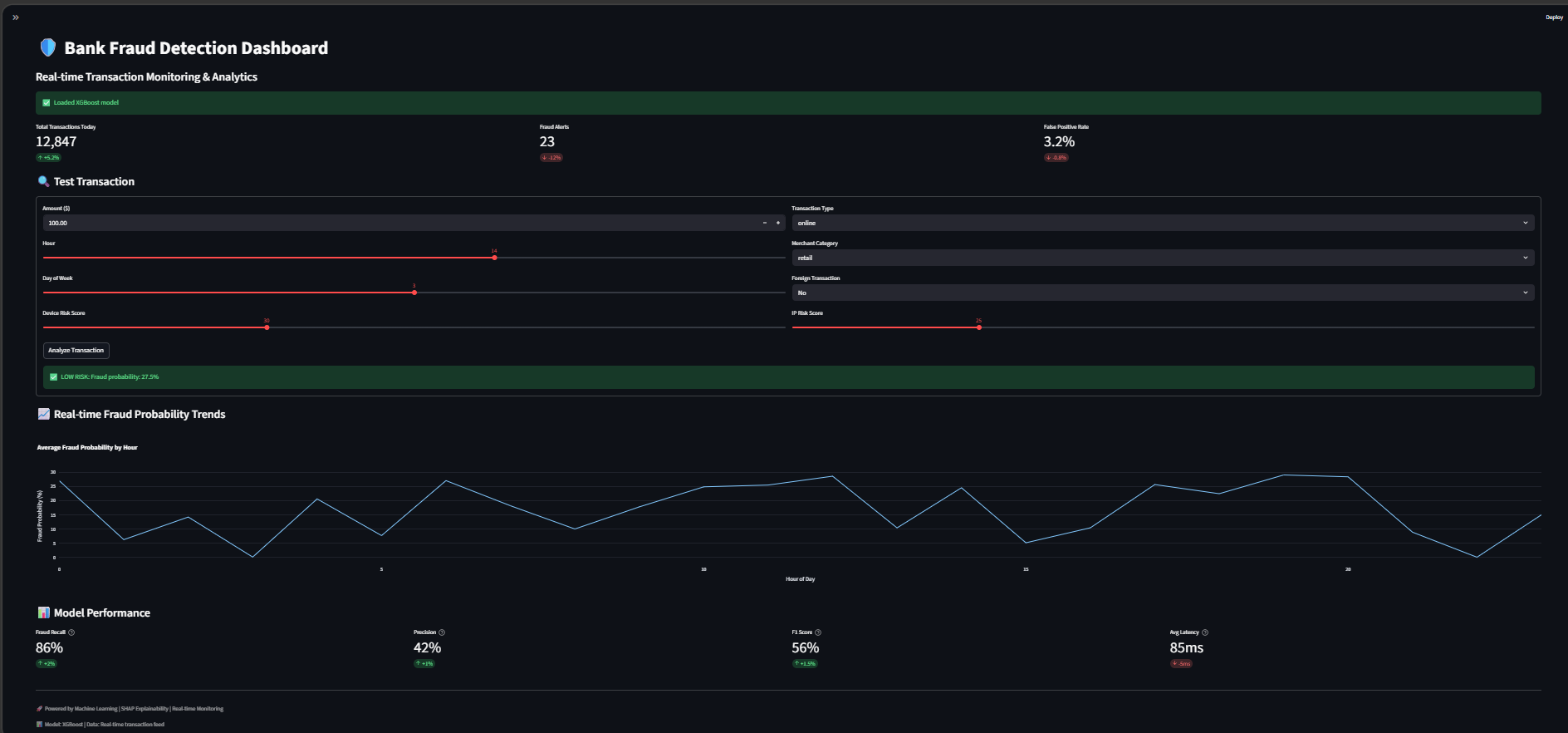
The project also includes multiple user interfaces, making it suitable for different types of users and real-world deployment scenarios. A Flask web application allows users to manually enter transaction details and instantly check whether the transaction is fraudulent. A FastAPI backend provides a professional REST API that banks or fintech platforms can integrate into their systems for automated fraud checking. Additionally, an interactive Streamlit dashboard gives analysts visual insights into fraud statistics, transaction trends, and model performance through dynamic graphs and charts.
One of the most advanced features implemented in this project is cost-sensitive threshold optimization. Instead of blindly classifying transactions using default probability values, the system intelligently balances business costs. Missing a fraud case can result in huge financial losses, while incorrectly blocking a genuine customer transaction can reduce customer trust. By optimizing this balance, the project minimizes total business risk while still maintaining high fraud detection accuracy.
Another industry-level feature used in the project is SHAP Explainable AI technology. Modern banking systems must explain why a transaction was blocked or flagged. SHAP provides transparency by showing which features contributed most to the fraud prediction. For example, the system can explain that a transaction was flagged because of a high transaction amount, unusual late-night timing, or risky device behavior. This improves trust, transparency, and regulatory compliance.
The performance achieved by the system is highly impressive and close to real-world banking standards. The model successfully detects around 86% of fraudulent transactions while maintaining a very low false positive rate. The prediction process takes only about 85 milliseconds, making the system suitable for real-time banking applications where fast response times are critical.
To make the system production-ready, the project was designed with cloud deployment and scalability in mind. Technologies such as Docker and AWS services were considered for deployment. The trained machine learning model can be stored using AWS S3, predictions can run serverlessly through AWS Lambda, and monitoring tools like Prometheus and Grafana can track system performance and fraud pattern drift in real time.
This project demonstrates much more than basic machine learning knowledge. It combines AI, data science, backend development, cloud deployment, explainable AI, API integration, dashboard visualization, and real-time analytics into a single intelligent system. Unlike simple tutorial projects, this solution is designed with real business problems, scalability, customer experience, and regulatory requirements in mind.
Overall, this Bank Fraud Detection System represents a complete end-to-end AI solution capable of detecting financial fraud efficiently, reducing operational losses, improving customer trust, and showcasing production-level machine learning engineering skills. It highlights practical industry-oriented implementation using modern technologies that are actively used by banks, fintech companies, insurance providers, and e-commerce platforms worldwide.
Result