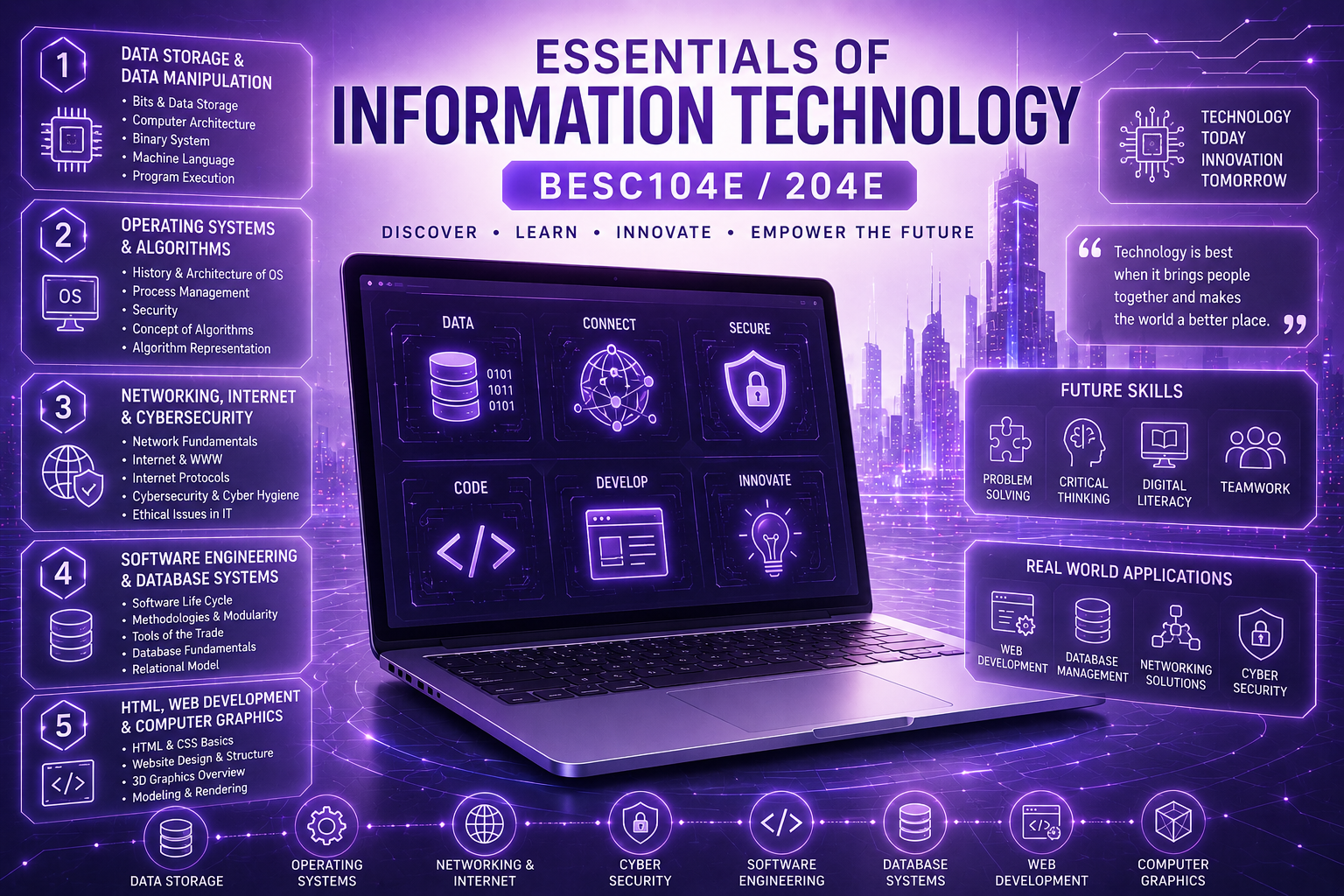
Module 1 – Data Storage and Data Manipulation
This module introduces how computers store and process data using bits and binary systems. Students learn about main memory, mass storage, and representation of integers and fractions in digital form. It also explains computer architecture, machine language, and program execution. Arithmetic and logical operations performed by computers are discussed clearly. Communication between computers and external devices is also covered. Overall, this module helps students understand the basic working principles of computer systems and digital data processing.
Click to get the Module1
Module 2 – Operating Systems and Algorithms
This module explains the role and importance of operating systems in managing computer resources. Students learn about the history, architecture, and functions of operating systems. Topics like process management, security, and handling multiple tasks are discussed. The module also introduces algorithms and their role in solving problems efficiently. Different methods of representing and designing algorithms are explained. Overall, this module builds problem-solving and system management skills essential in computing.
Click to get the Module2
Module 3 – Networking, Cybersecurity, and Ethics
This module focuses on computer networks, the Internet, and cybersecurity concepts. Students learn about network fundamentals, internet protocols, and the working of the World Wide Web. Cybersecurity topics such as information security, cyber hygiene, and security teams are introduced. The module also explains common cyber threats and methods to improve digital safety. Ethical issues related to online content and ownership rules are discussed. Overall, it helps students understand secure and responsible use of information technology.
Click to get the Module3
Module 4 – Software Engineering and Database Systems
This module introduces software engineering concepts and the software development life cycle. Students learn different software development methodologies and the importance of modular programming. Tools and techniques used in software engineering are also explained. The database section covers database fundamentals and the relational model for storing and managing data efficiently. Students understand how large amounts of information are organized in database systems. Overall, this module provides the basics of software design and data management.
Click to get the module4
Module 5 – HTML, Website Development, and Computer Graphics
This module explains the basics of website development using HTML and CSS. Students learn website structure, design, and storyboarding techniques for creating web pages. The module also introduces computer graphics and their applications in digital media. Concepts like 3D graphics, modeling, and rendering are discussed. Students gain an understanding of how websites and graphical systems are developed. Overall, this module combines creativity and technology for modern web and graphic design applications.